Climbing That Hill
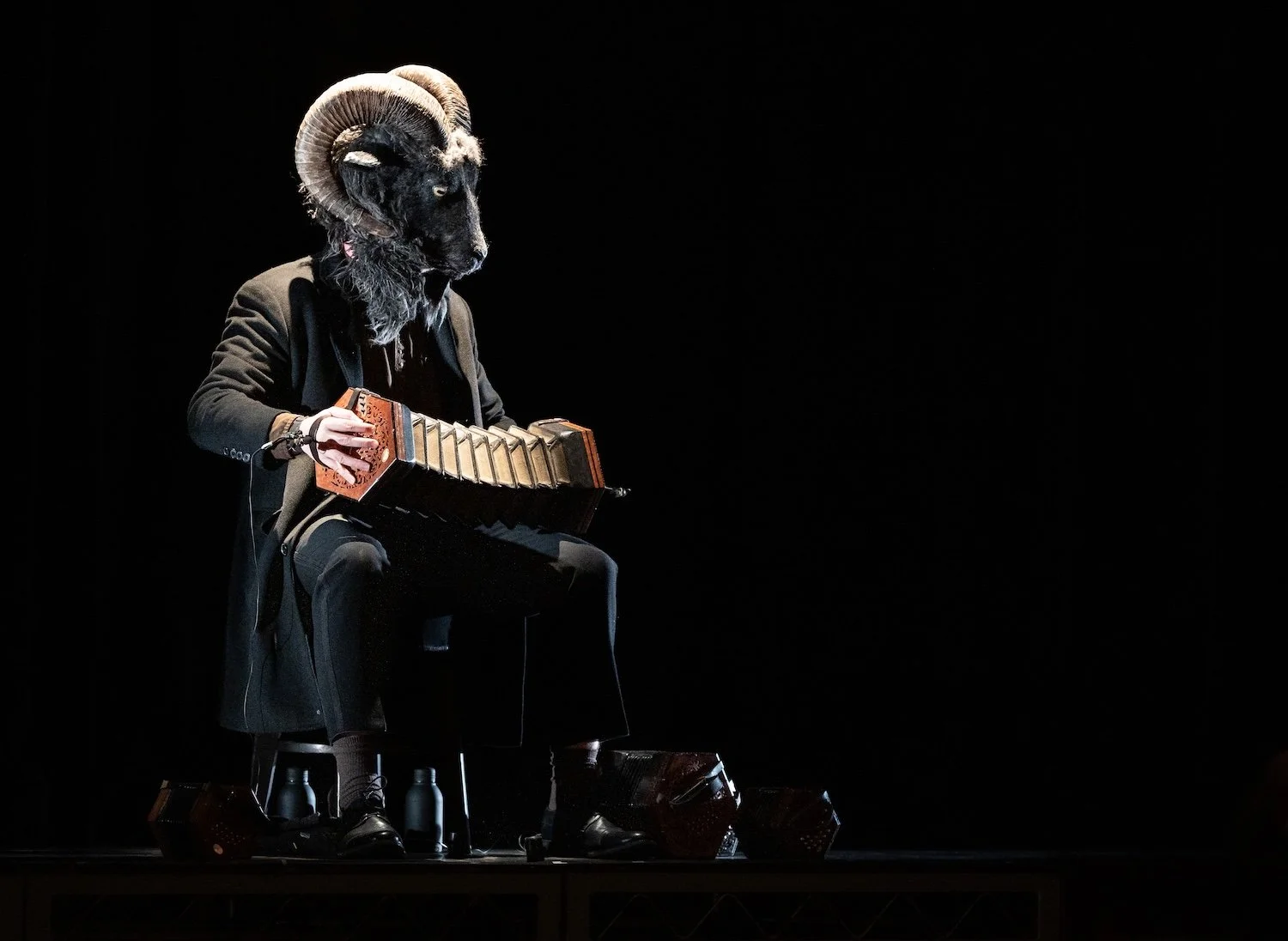
Photo: David Gray
Irish choreographer Michael Keegan-Dolan and his Teaċ Daṁsa (House of Dance) company stormed onto the Théâtre Maisonneuve stage at Place des Arts with MÁM, making their Québec debut, wrapping up its North American run, and opening Danse Danse’s 29th season. The title suggests a meeting place, and Keegan-Dolan is on record saying the work was created in a community hall in 2019, at the foot of Cnoc Bhréanainn (Mount Brandon, though notably the Gaelic cnoc translates directly as “hill”), a sacred mountain standing 952 metres (3,123 feet) high in Corca Dhuibhne (West Kerry), the Gaelic-speaking district (Gaeltacht) on the Dingle Peninsula.
This production, dating from 2019, is steeped in the mythology and spiritual history of the area. As my research tells me, long before Christian times, Cnoc Bhréanainn was a focus of pagan ritual, specifically linked to the ancient Celtic harvest festival of Lughnasadh. The mountain was later Christianized and named after Naomh Bhréanainn (St. Brendan the Navigator). Lore has it that Brendan spent time in prayer at the summit before setting sail in a leather currach on his mythical seven-year voyage across the Atlantic in search of the “Promised Land.”
As the audience enters the auditorium, an omnipresent drone-like sound fills the space. The curtain rises to reveal an unnervingly mysterious and incongruous scene: an imposing figure (Cormac Begley), wearing the mask of a black ram, stands on a raised platform facing off against a curiously expressionless young girl in a white dress. Shortly thereafter, a massive curtain behind them drops, revealing a dozen hooded figures in black suits on another raised platform, perhaps judges or those awaiting execution. The masks fall away moments later, and the show takes off.
What audiences get in MÁM is some great dancing from the twelve-member ensemble. Cormac plays the concertina from beginning to end, its punchy, reedy tone accompanied by the mesmerizing five-member contemporary folk ensemble Stargaze, whose layers of traditional Irish music are terrific throughout. The dancers occasionally scream and yowl, scowl at the young girl, and stamp their feet. She is a catalysing figure, drawing the brood’s scorn and ire, yet at times she simply bears witness to what evolves around her while sipping pop and chomping on chips. Why? I kept asking. And why is she so impassive? But it is the dancing that makes the evening sing, as the performers coil and ultimately let loose with tightly choreographed abandon. There is a winning precision and clarity to the movement, as well as to its shifts in speed and presence.
The music is likewise captivating, full of bounce and lift, marrying beautifully with the troupe’s energetic, alert dancing. You can almost imagine yourself in a noisy pub in County Clare when suddenly a folk jig erupts and the music and merriment take over. That is what makes this dance-theatre performance notable and memorable, even if, as in those places, the evening occasionally feels as though it wears on. I recognize that the show is steeped in lore, though I honestly found much of its myth-making too subtle and elusive for my comprehension. What rang true was the ever-present push and pull between past and present, and the evident conflicts embedded within those histories.
